Breakfast seminar | Thursday 29 January 2026 | 8.30am–10.30am | Kindly hosted by Newmark

Residential real estate is increasingly being considered as part of diversified property portfolios, raising questions about which living sectors offer the strongest opportunities today and what the key practical and regulatory considerations are for investors.
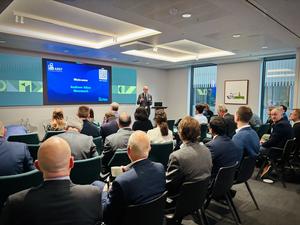
Kindly hosted by Newmark, this AREF breakfast seminar brought together fund managers, investors and advisers to explore the role of residential investment within a wider portfolio context. The session opened with a scene-setting presentation from Matt Soffair, Senior Research Manager at Legal & General Asset Management, followed by a panel discussion chaired by Andrew Smith, Chief Investment Officer at Hearthstone Investments.
Speakers
Moderator: Andrew Smith, Chief Investment Officer, Hearthstone Investments
Presentation: Matt Soffair, Senior Research Manager, Legal & General Asset Management
Panellists:
- Laura Sweet (Swiss Life Asset Managers UK)
- Dan Batterton (Legal & General Asset Management)
- Naomi Green (Schroders Capital)
- James Sivyer (Gallagher)
Key Themes and Insights
1. Growth and Maturity of Residential as an Institutional Asset
The UK residential sector has seen substantial growth in institutional investment over the past decade or so, rising from just 1% of portfolio allocations in 2010 to around 11% today. However, the UK still lags behind markets like the US, where residential allocations can reach 30%.
There is broad consensus that the sector has substantial headroom for further growth, with expectations that allocations could double or triple, possibly making it the single largest sector in the investment universe, as the market matures and more stabilised assets become tradable.
2. Performance and Fundamentals
Residential property has delivered strong, stable returns with lower volatility compared to other property sectors. While performance data remains relatively limited, the sector does seem to be more resilient to a broader real estate downturn, as demonstrated in 2022. This is prompting more fund managers of balanced funds to consider adding residential property, for the diversification benefits it brings to their portfolios.
Key drivers include robust fundamentals. Supply constraints combine with sound, inflation-matching cashflows, where rental growth shows low correlation versus the broader property market. Occupancy levels are consistently higher over time, relative to commercial property.
The sector does offer lower yields, typically around 4%, but on top of this comes CPI+1% rental growth. Given the reliability of these cashflows also, this return profile compares very favourably to index-linked gilts.
3. Market Dynamics and Investment Strategies
The panel discussed the diversity within the residential sector, with at least six sub-sectors, including student accommodation, build-to-rent (BTR), single-family housing, and affordable housing. Each sub-sector presents unique opportunities and risk profiles. The panel highlighted the importance of market and location selection, as rental growth and returns can vary significantly across regions and demographics.
There is a trend toward greater specialisation, with some investors preferring focused funds (e.g., social or affordable housing specialists), while others see value in blended, diversified approaches.
More residential fund managers are beginning to look at using gearing to enhance fund returns. However, the investors on the panel expressed some concern around that. They believe their clients do not need the volatility debt can introduce. They are more attracted by the Impact value, with investment returns sufficient without gearing.
4. Development Challenges and Opportunities
A sharp drop in new development starts was noted as a concern. This was attributed to rising construction costs, higher cost of capital, and regulatory changes. This presents both a challenge and an opportunity though: viable projects may benefit from less competition and stronger rental growth as supply tightens. Furthermore, as there is so much support at Local Authority level for new homes, this should help the pipeline improve over time.
There is a lot risk in development and viability is an issue currently. Developing stock can take five years to stabilise returns. But there is built product out there, if you know where to look, available at a good discount to the build cost.
5. ESG, Social Impact, and Regulation
Environmental, Social, and Governance (ESG) considerations are increasingly central to investment decisions. Energy efficiency, social impact (such as providing homes for key workers or vulnerable adults), and regulatory compliance were recurring themes.
There was, however, some debate about just how much tenants value environmental aspects of their rental home, versus the cost of living in it. We should expect to see increasing demands from tenants around their environmental impact in general, though perhaps lower income tenants are likely to be more focused on costs.
The evolving regulatory environment, including the Renters’ Rights Bill and potential for rent controls, was discussed. It was generally considered the latest changes were relatively benign for the institutional rental market. The consensus was that while regulation is increasing, the UK government generally views institutional investment as a partner in addressing housing supply shortages. They recognise the need to attract institutional capital.
6. Capital Flows and Investor Appetite
There is growing interest from Local Government Pension Schemes (LGPS) and Defined Contribution (DC) pension funds, with expectations of substantial allocations to residential property in the coming years. Many of these investors in residential are adding to their overall real estate exposure, rather than switching allocations from balanced funds, for example.
LGPS have focused on affordable and social housing thus far, preferring to allocate to specialist funds. Considerably more capital is expected from LGPS into residential when the pooling process finishes, with possibly huge investment in both Affordable and affordable. (Affordable rent being up to 80% of local market rental levels, whereas affordable rent generally means any rent priced below the prevailing market level)
Some concerns were expressed around the number of sub-scale funds currently available and some consolidation was expected, for example the recent acquisition of PRS REIT. It was suggested larger, more efficient “super funds,” should help attract large DC capital.
In summary:
The event underscored the residential sector’s growing importance in institutional portfolios, and its attraction to investors more generally, with its downside resilience and diversification benefits. Some challenges remain, including scaling up supply, navigating regulatory changes, and balancing ESG goals with affordability and returns. But the panellists were certainly optimistic about the sector’s long-term prospects, citing its strong fundamentals, supportive policy trends, and increasing investor appetite.
Event resources
Presentation Slides
Download the slides by clicking here, or on the image below:

Thank you to Newmark for hosting the event